

Fairy gardens are the ultimate way to bring a touch of magic into your home without needing a sprawling backyard. Even a tiny windowsill or a bookshelf can become a portal to a whimsical realm if you have the right inspiration. These miniature landscapes allow you to express your creativity through tiny textures and scaled-down greenery.
By focusing on vertical elements and clever container choices, you can build a thriving ecosystem in the palm of your hand. Whether you are using vintage teacups or repurposed glass jars, the secret lies in the details. Get ready to transform your smallest nooks into enchanting escapes with these twenty unique and creative miniature garden concepts.
1. The Teacup Kingdom
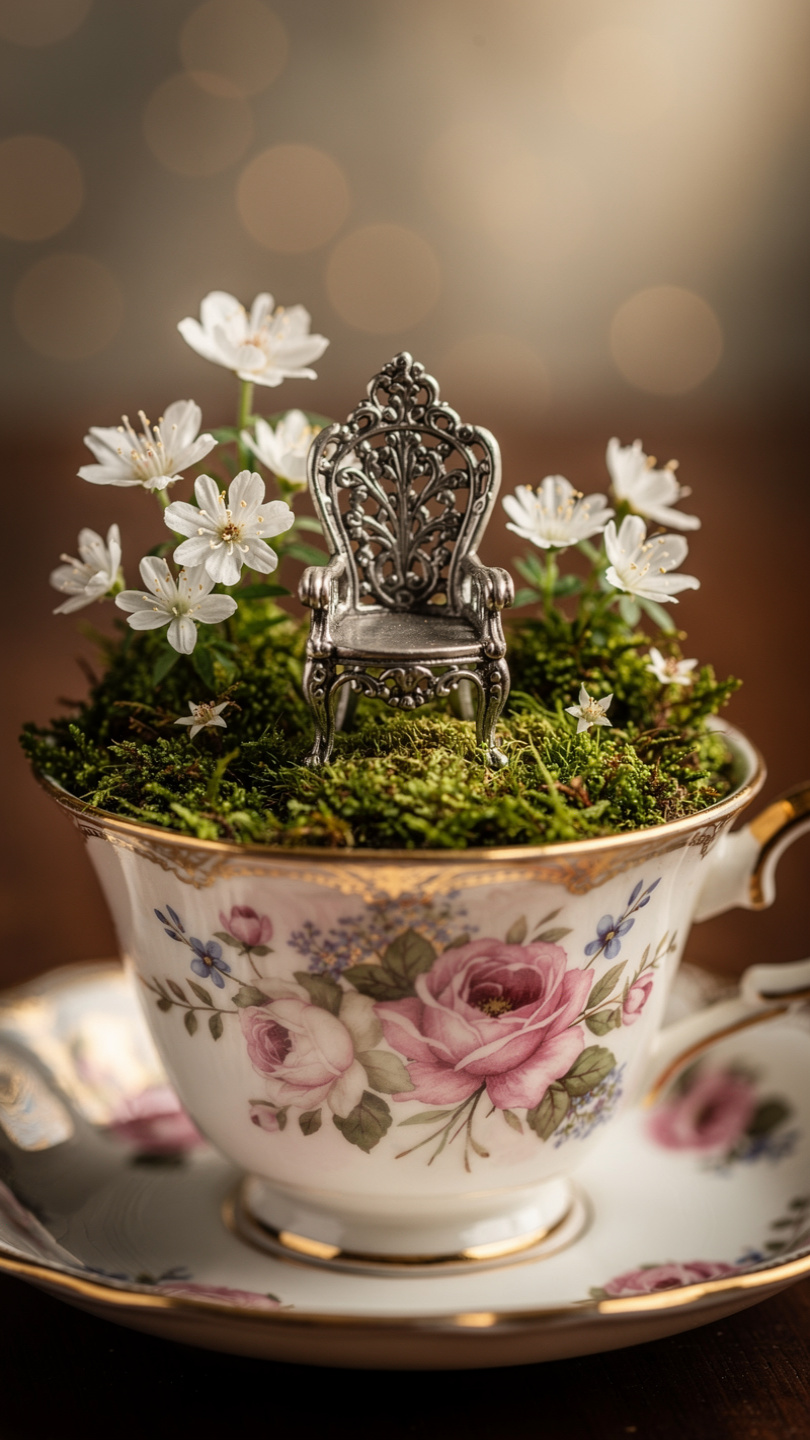
Transform a vintage porcelain teacup into a royal residence for a tiny sprite. Use a layer of small pebbles for drainage, then add a spoonful of potting soil and a sprig of delicate moss. A single, tiny pearl or a painted pebble can act as a magical throne, creating an elegant and sophisticated miniature scene.
This setup is perfect for office desks or narrow windowsills where space is at a premium. Choose a saucer to match, providing a stable base for your tiny masterpiece. Adding a miniature wire fence or a small “Welcome” sign made from a toothpick gives it a lived-in feel. It is a charming way to recycle old, chipped china.
2. Broken Pot Waterfall
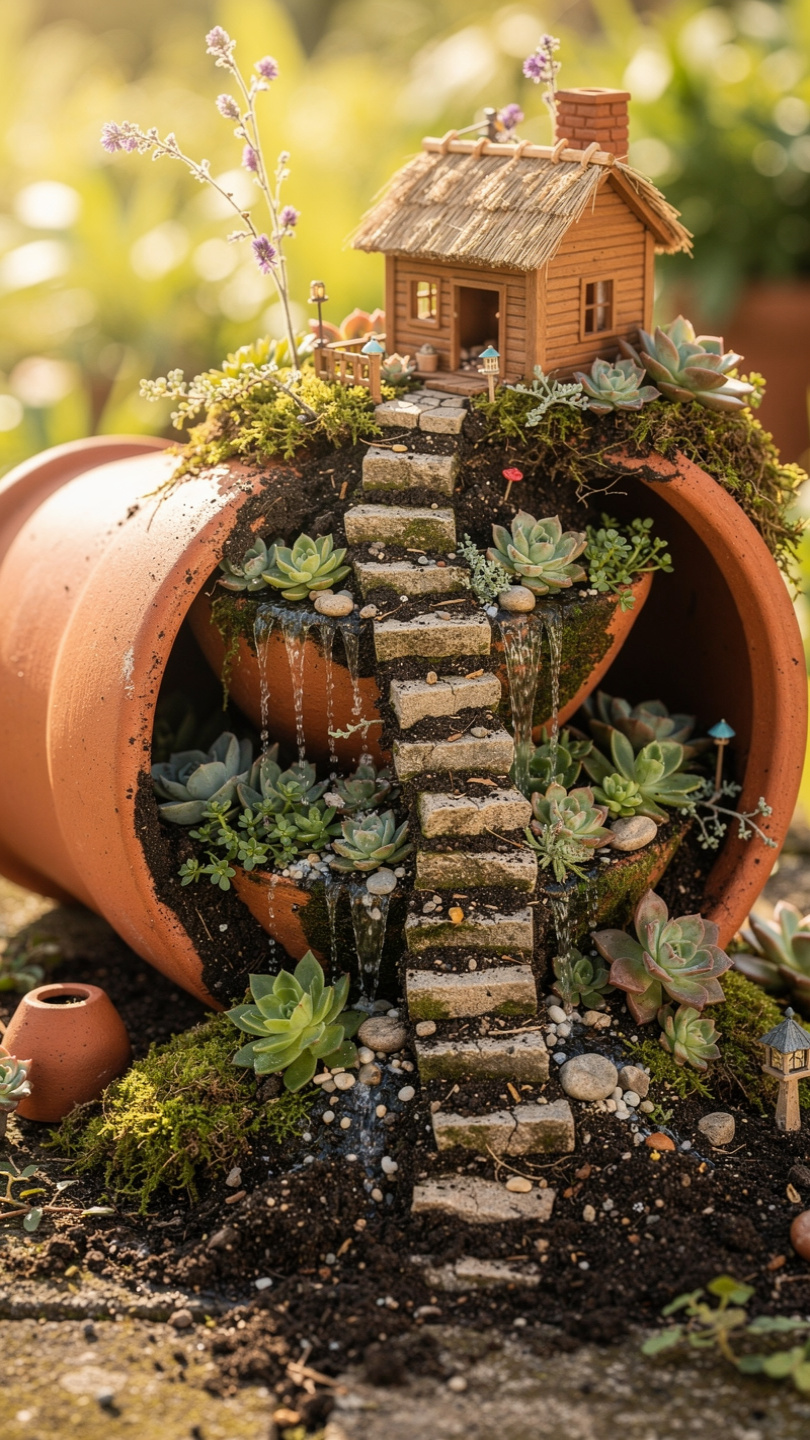
Don’t throw away that cracked terracotta pot; instead, use the shards to create a tiered stone staircase. Lean the broken pieces against a central mound of dirt to form “levels” that lead up to a small resin cottage. Plant trailing succulents like String of Pearls to mimic the look of a flowing, green waterfall.
The rugged texture of the terracotta provides a beautiful, earthy contrast to the soft green plants. You can place small blue glass beads along the “steps” to simulate water trickling down the mountain. This vertical design saves horizontal space while offering incredible visual depth. It is a brilliant example of turning garden accidents into a piece of enchanting miniature art.
3. Lantern Light Haven
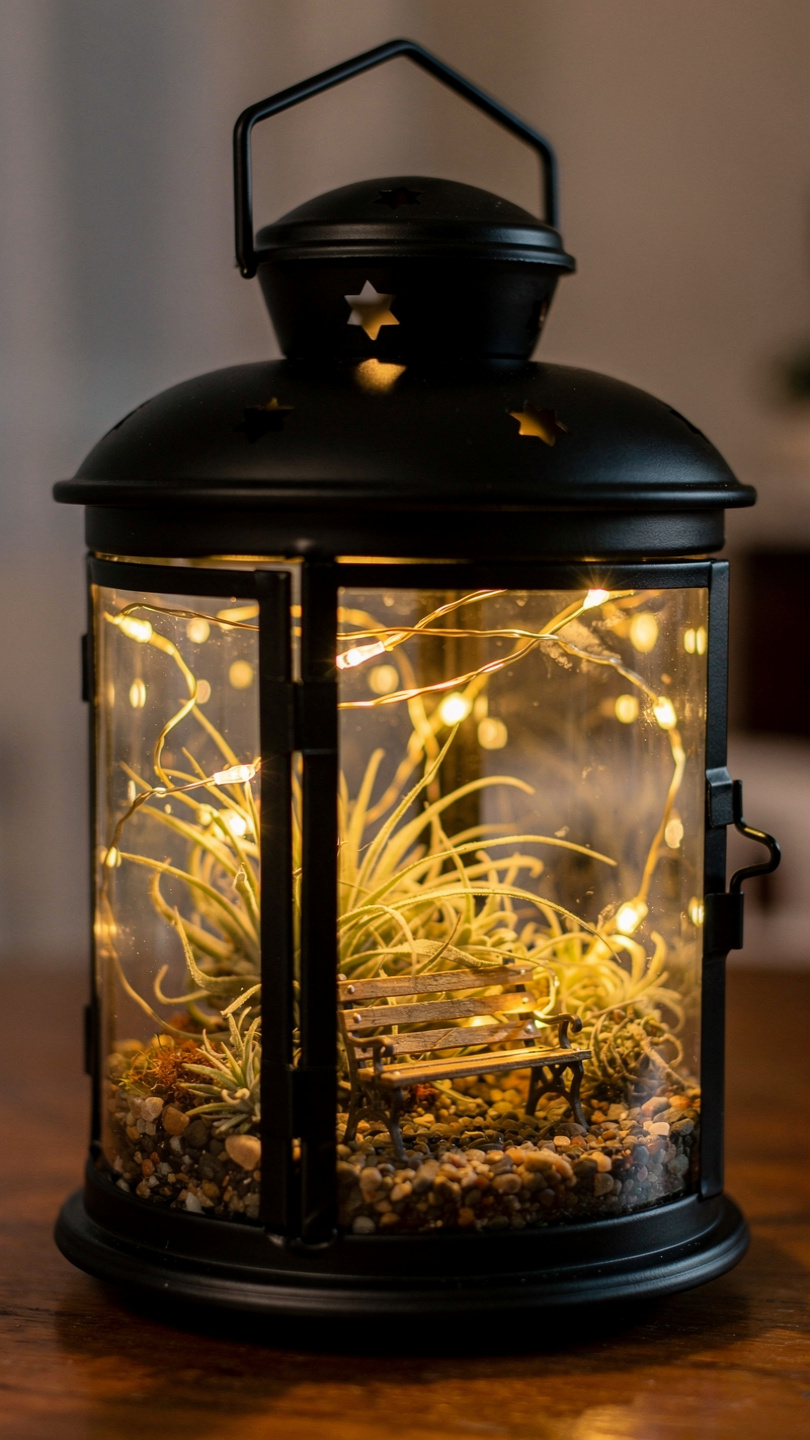
A glass garden lantern makes for an excellent, protected environment for a fairy dwelling. Place a battery-operated tea light at the top to illuminate the garden from above during the evening hours. Inside, use air plants and dried lavender to create a fragrant, low-maintenance forest that thrives behind the glass panels of the lantern.
The enclosed nature of the lantern helps maintain humidity, which is great for certain mosses. You can hang the lantern from a hook or place it on a side table as a glowing centerpiece. Decorate the floor with tiny pinecones and a miniature wooden bench. It creates a cozy, safe atmosphere that feels like a hidden secret in the dark.
4. The Bookshelf Terrarium
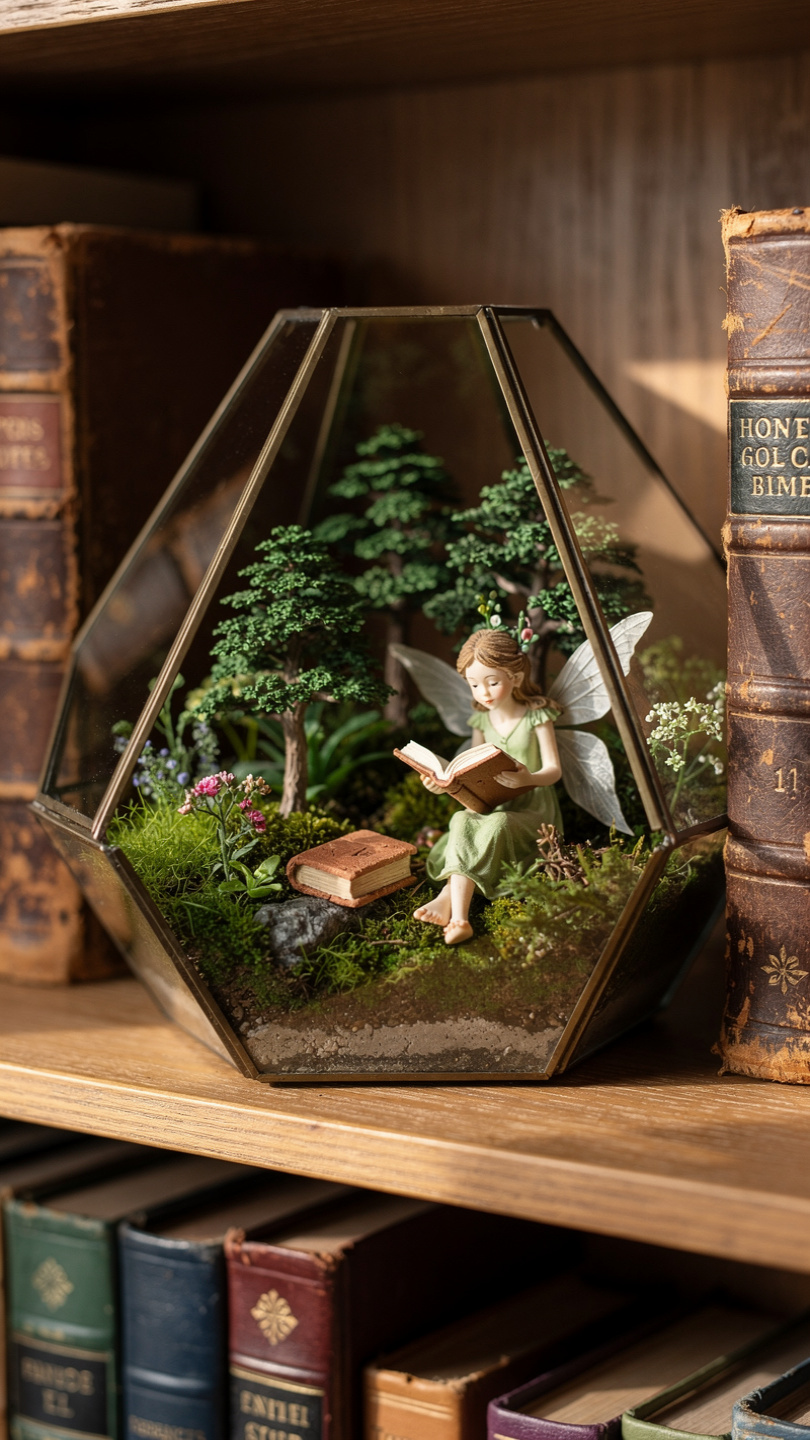
Utilize a wide-mouthed glass jar or a geometric terrarium to bring life to your library. Layer charcoal, rocks, and soil to ensure the health of your miniature plants in the enclosed space. Add a tiny “book” made from polymer clay and a small reading fairy to match the theme of your surrounding bookshelf.
This idea integrates your love for literature with your passion for gardening seamlessly. The glass walls protect the delicate plants from dust and keep the moisture levels consistent for the moss. It serves as a living bookend that sparks the imagination of anyone browsing your collection. A small sprig of fern can represent an ancient, towering forest tree.
5. Thimble Forest
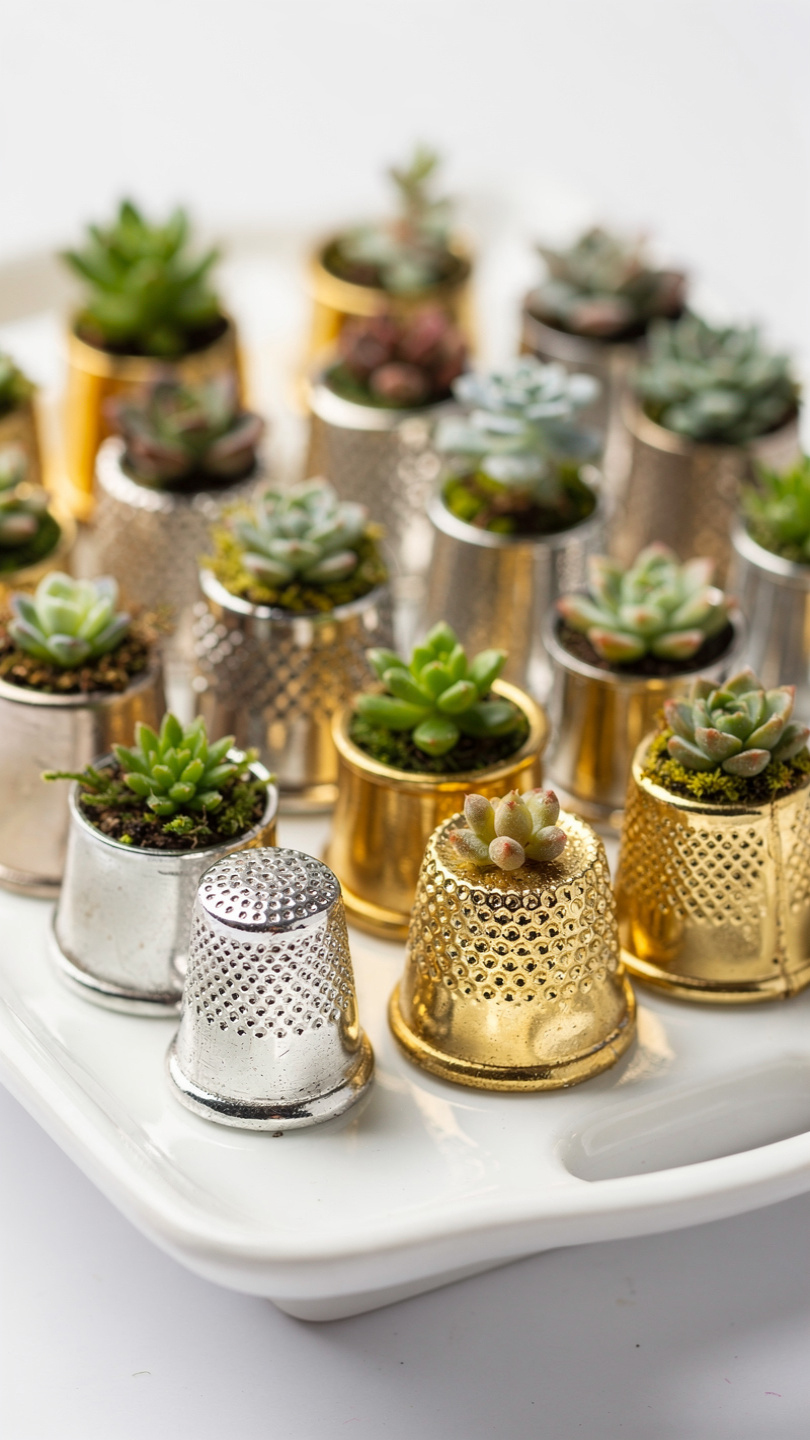
For the truly space-starved, a collection of sewing thimbles can house the world’s smallest forest. Each thimble can hold a tiny succulent cutting or a single sprout of clover. Group five or six thimbles together on a decorative tray to create a “forest” that fits entirely within the palm of your hand for display.
This is a wonderful project for those who enjoy extreme miniature crafting and precision. Use a toothpick to carefully place the soil and a pair of tweezers to position your plants. You can paint the thimbles in bright colors to add a pop of personality to the display. It is a quirky, conversation-starting piece that requires almost no room.
6. The Birdhouse Bungalow
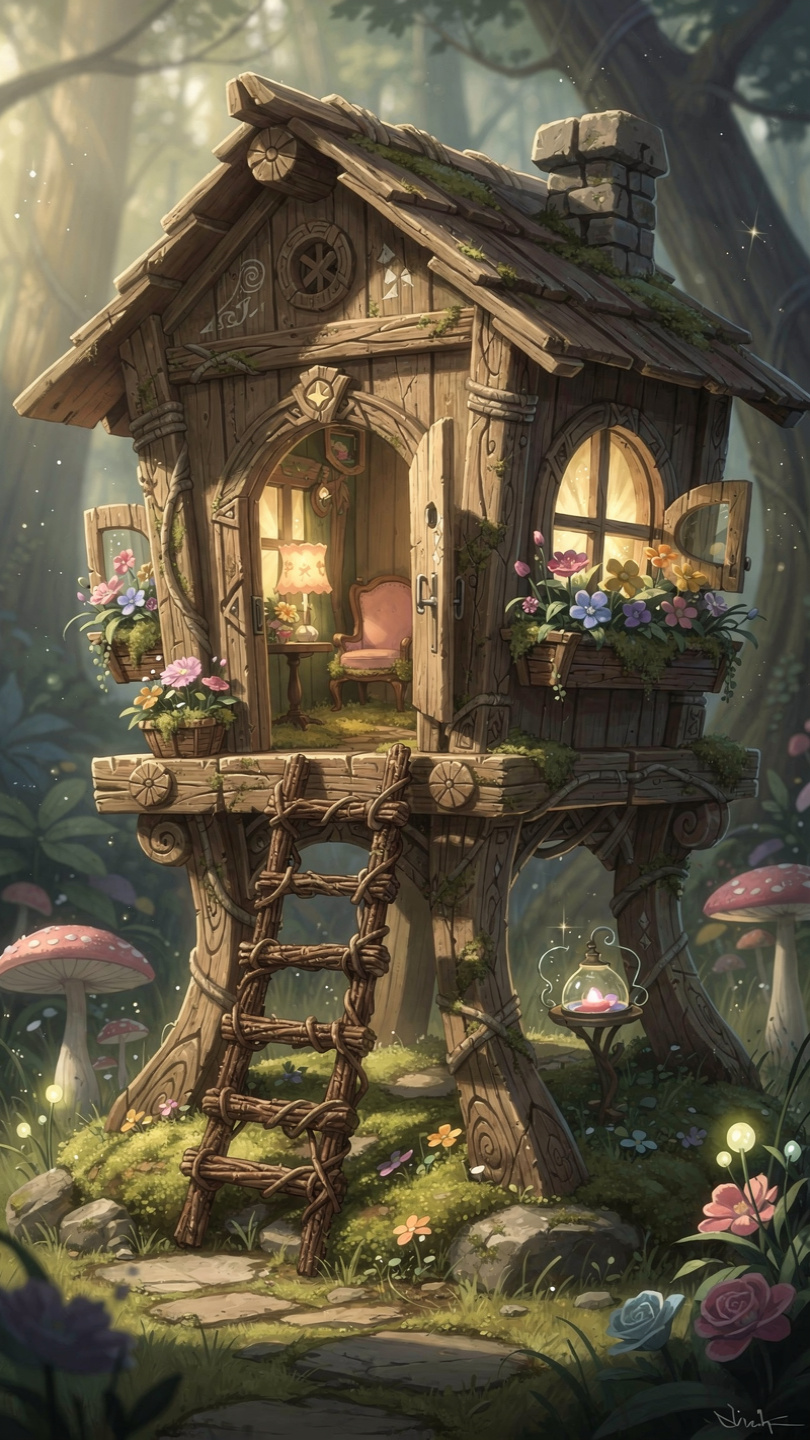
Convert a simple wooden birdhouse into a vertical fairy apartment by removing the front panel or using the entrance hole for a “balcony.” Fill the base with thick cushions of Irish moss and a tiny ladder made from twigs. This allows you to utilize vertical space on a wall or fence while keeping the footprint extremely small.
The height of the birdhouse provides a perfect backdrop for climbing vines or miniature ivy to crawl up the sides. Paint the roof in a bright, whimsical color like teal or lavender to catch the eye of passersby. It is a brilliant way to add a pop of fantasy to a narrow balcony or a cramped garden corner.
7. Seashell Shoreline
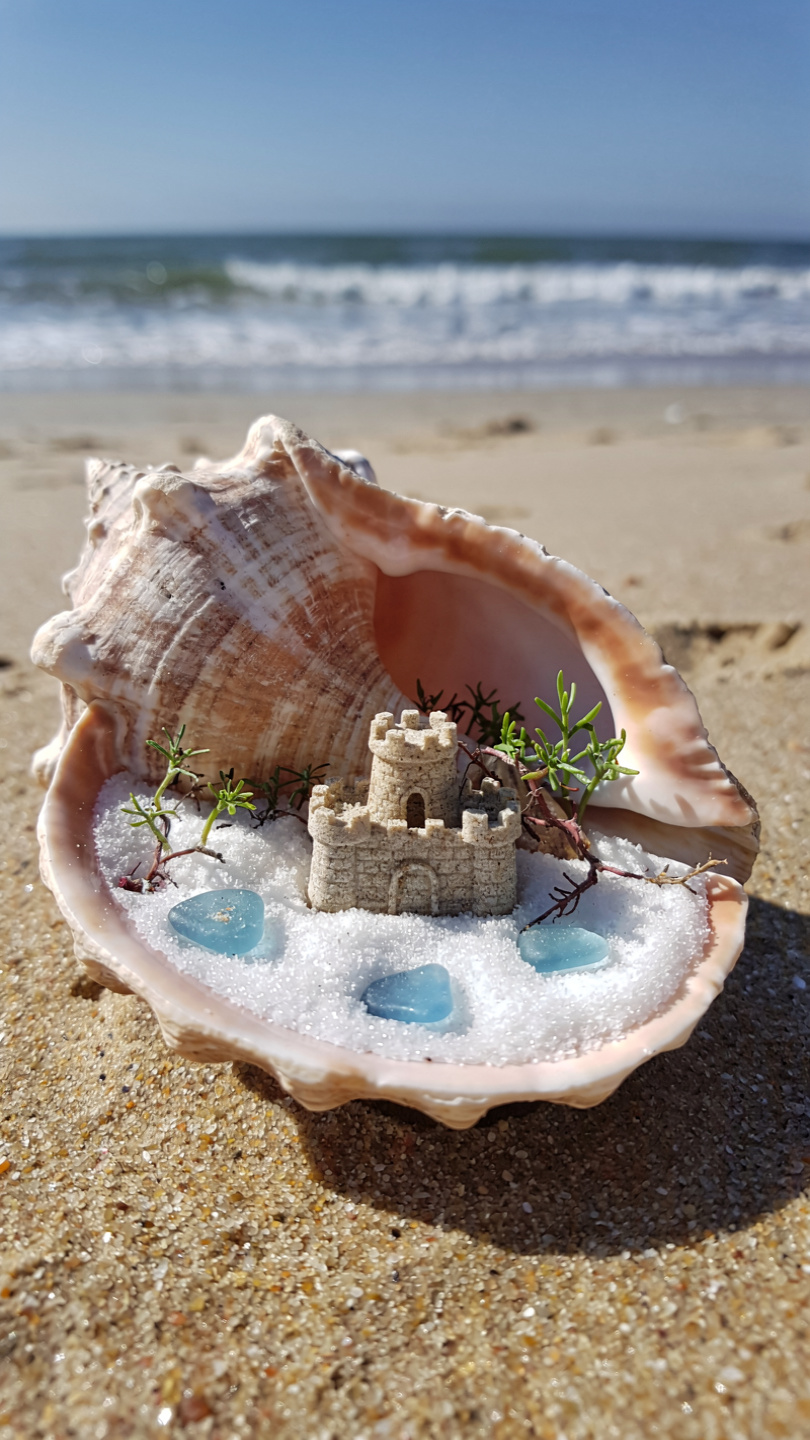
Large conch or scallop shells make excellent natural containers for a coastal-themed miniature garden. Use white sand instead of traditional mulch and tuck in small air plants that don’t require deep soil to thrive. Add a few tiny blue sea glass shards to represent the ocean tide washing against a miniature sandcastle.
This compact garden is ideal for a bathroom shelf or a sunny kitchen window. The natural curves of the shell create a built-in frame for your tiny beach scene. It is low-maintenance and brings a breezy, nautical vibe to your indoor decor. A tiny driftwood “log” finishes the look, making it feel like a miniature day at the beach.
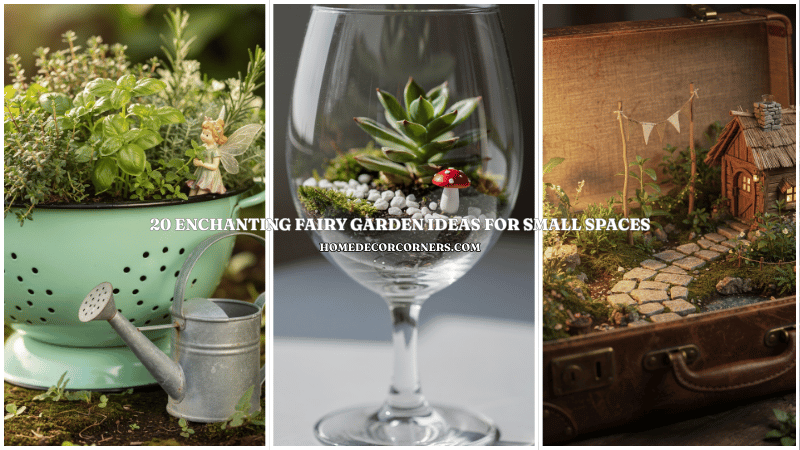
8. The Vintage Suitcase Escape
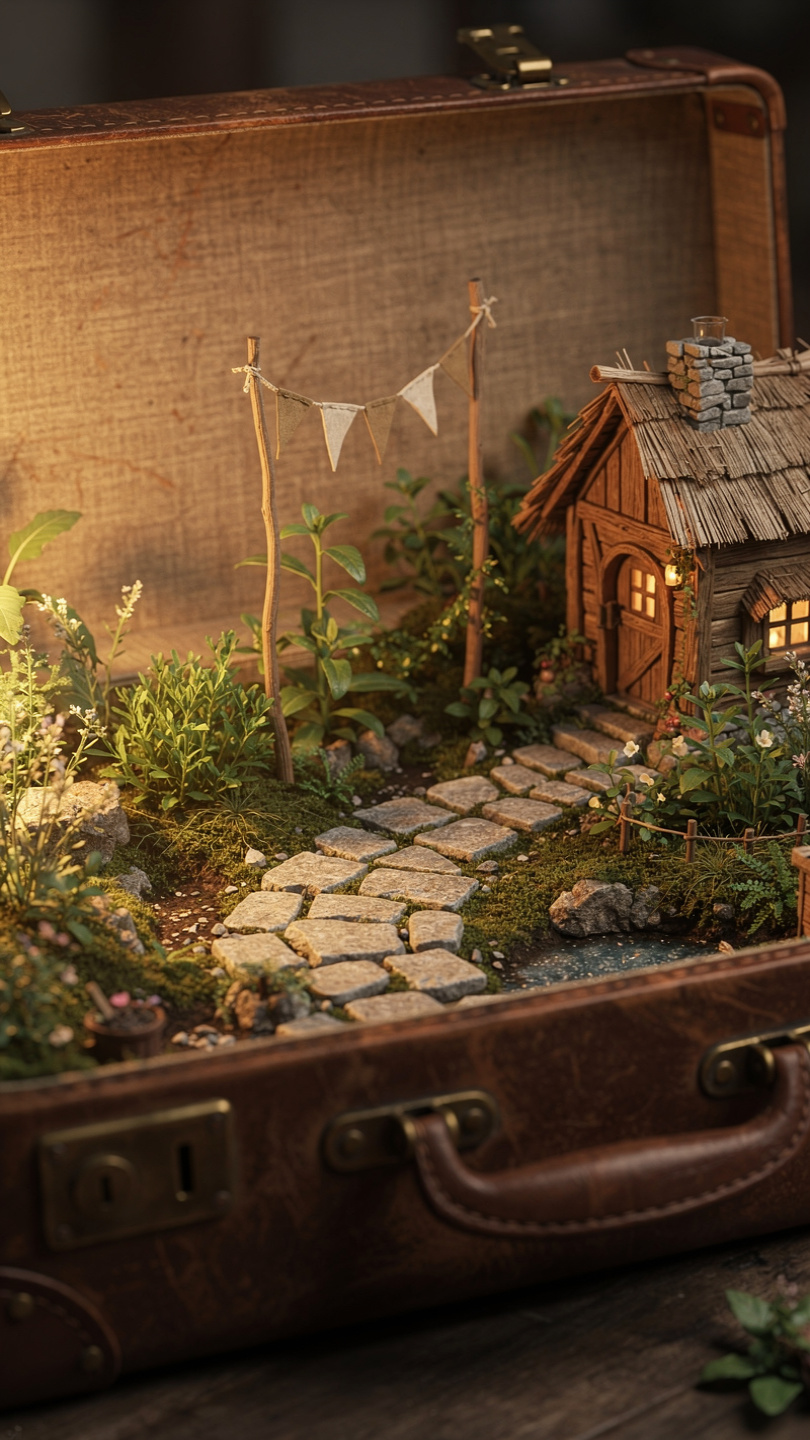
An old-fashioned vanity case or a small tin suitcase can hold an entire fairy village. Use the lid as a backdrop for a painted sky or a tiny bunting banner made from twine. Inside, create different “rooms” or zones using gravel paths to separate a tiny vegetable patch from a miniature sleeping area.
The beauty of the suitcase garden is its portability; you can close the lid and move it easily whenever you need the space. It provides a deeper soil bed than a saucer, allowing you to plant small flowering herbs like thyme. This creates a nostalgic, storytelling element that feels like a magical world packed away for a long journey.
9. Colander Herb Hollow
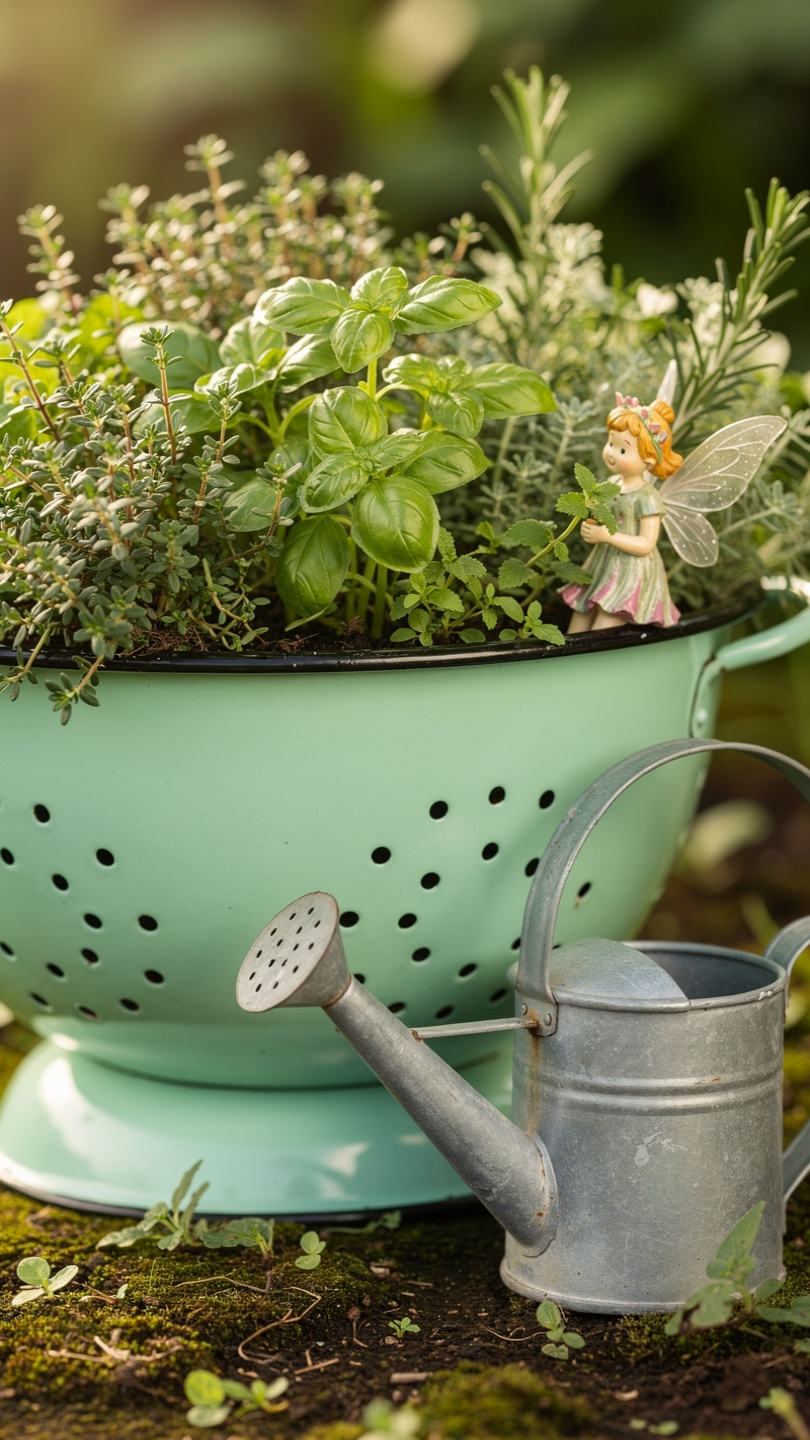
A bright enamel colander provides excellent natural drainage, making it a functional and stylish home for a kitchen fairy garden. Plant aromatic herbs like woolly thyme or miniature basil to create a lush, edible forest. The side holes allow for air circulation, which keeps the roots of your tiny plants healthy and vibrant.
Hang the colander from a pot rack or place it on a sunny countertop for easy access while cooking. You can nestle a tiny “chef” fairy or a miniature watering can among the leafy greens. It combines the utility of an indoor herb garden with the playful charm of miniature landscaping. It is a perfect blend of form and function.
10. The Wine Glass Woodland
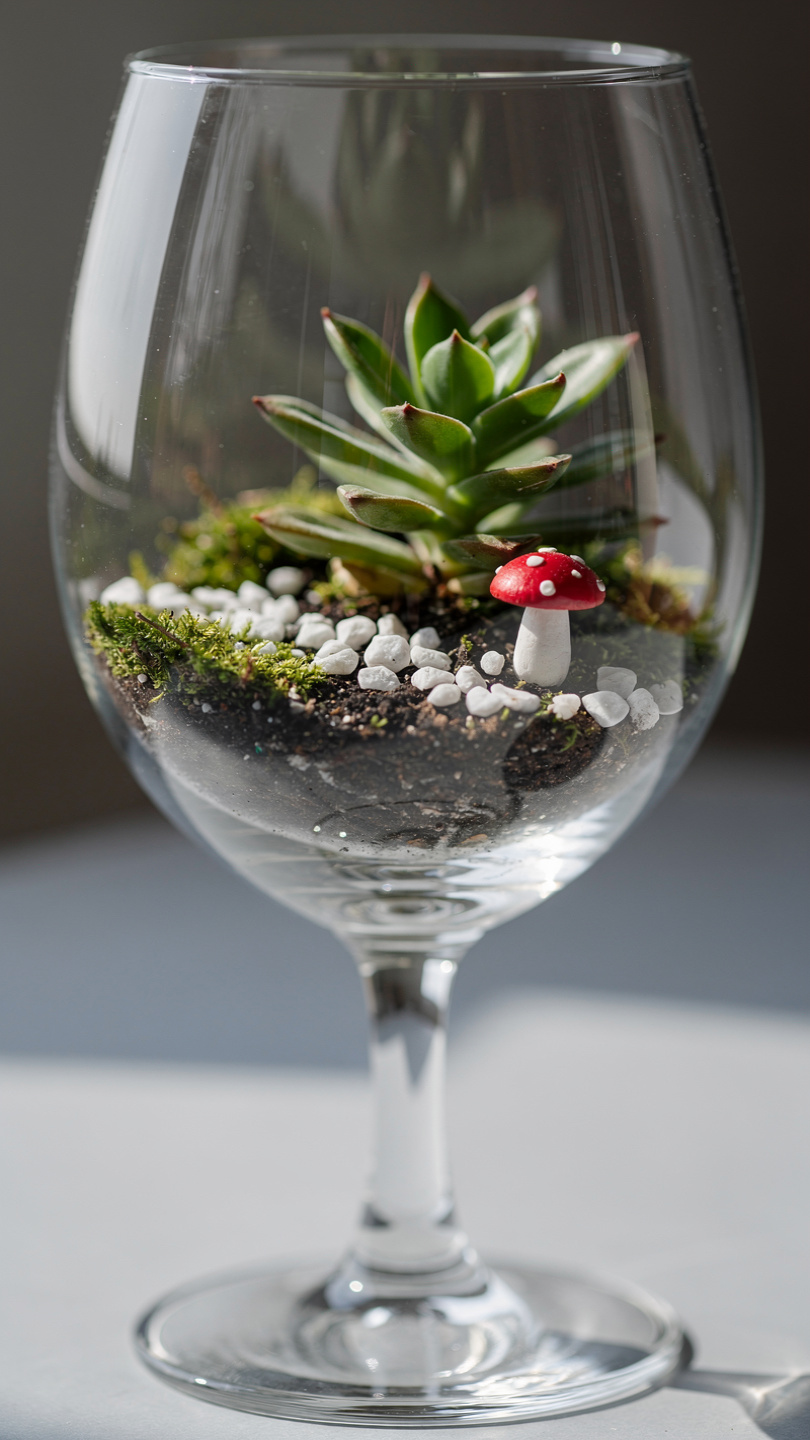
An oversized wine glass or a glass goblet can house a sophisticated, minimalist woodland scene. Layer white quartz pebbles at the bottom for a clean look, followed by a thin layer of soil and a single, striking succulent. Add a tiny deer figurine or a single red-capped mushroom to complete the quiet, forest floor aesthetic.
This elegant design works beautifully as a dinner table centerpiece or a sophisticated accent on a bar cart. The clear glass allows you to see the interesting root systems and layered substrate from every angle. It is a modern take on the fairy garden that focuses on clean lines and singular, impactful details. It feels very high-end.
11. Mason Jar Magic
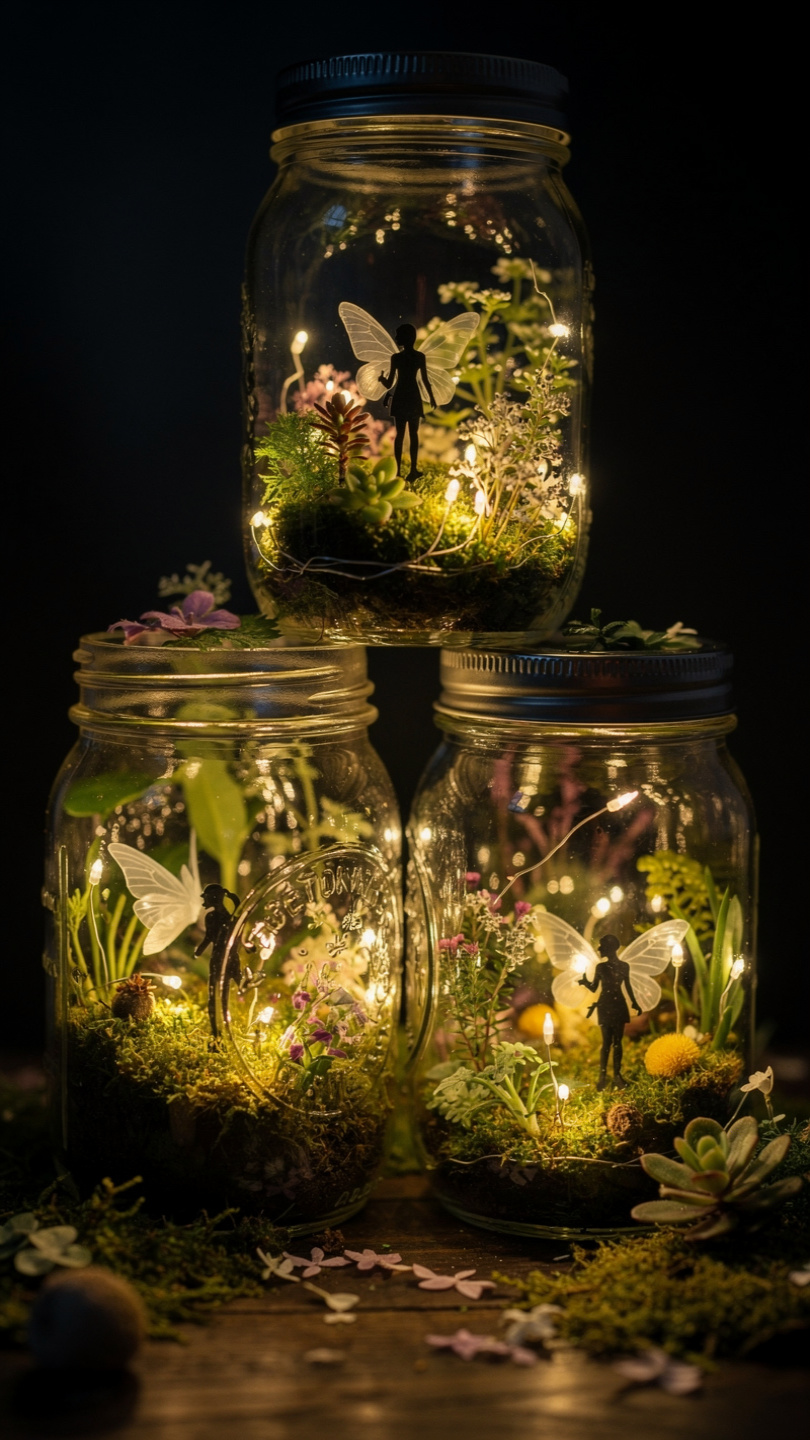
Mason jars are a staple for small-space DIY projects, and they make perfect “lightning bug” fairy homes. Place a string of micro-LED lights at the bottom before adding your soil and moss to create a glowing ground effect. Use a small piece of lace instead of a solid lid to allow the plants to breathe easily.
These jars are perfect for grouping together in a cluster of three at different heights. You can use different colored mosses or sands in each jar to create a rainbow of miniature environments. They are incredibly easy to put together and make wonderful, handmade gifts for friends. The glow adds an extra layer of nighttime enchantment to your room.
12. Floating Tea Strainer
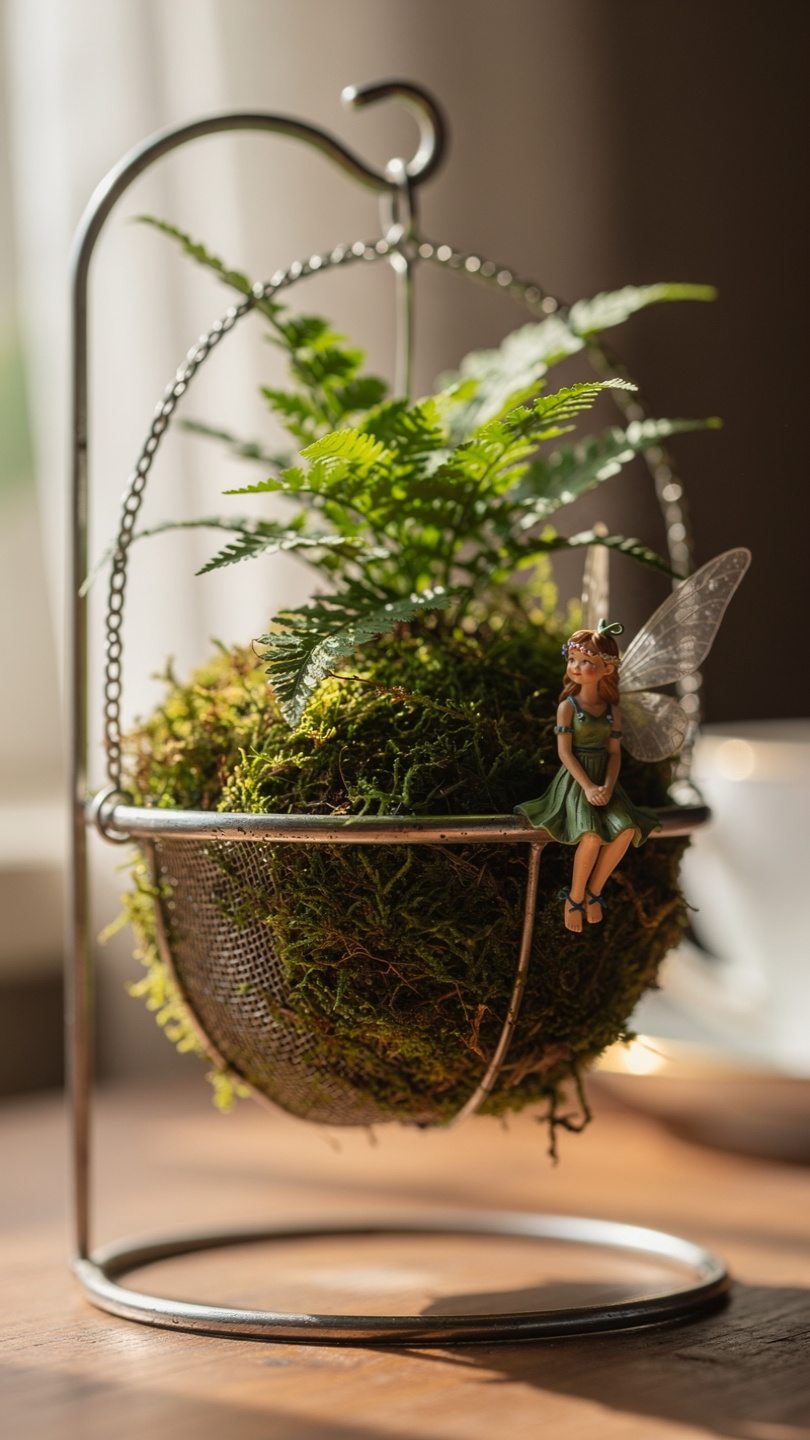
A metal mesh tea strainer can be hung from a branch or a decorative stand to create a “floating” garden. Use long-fiber sphagnum moss to line the mesh, then tuck in a tiny fern or a “baby’s tears” plant. It creates a spherical, suspended world that looks like a magical floating island from a fantasy novel.
This idea is perfect for those who have absolutely no flat surface space left to spare. The hanging nature of the strainer allows the plant to trail downwards, creating a beautiful draped effect. It is a quirky, steampunk-inspired take on the traditional garden. It catches the light beautifully when placed near a window, casting intricate shadows on the walls.
13. The Baking Tin Village
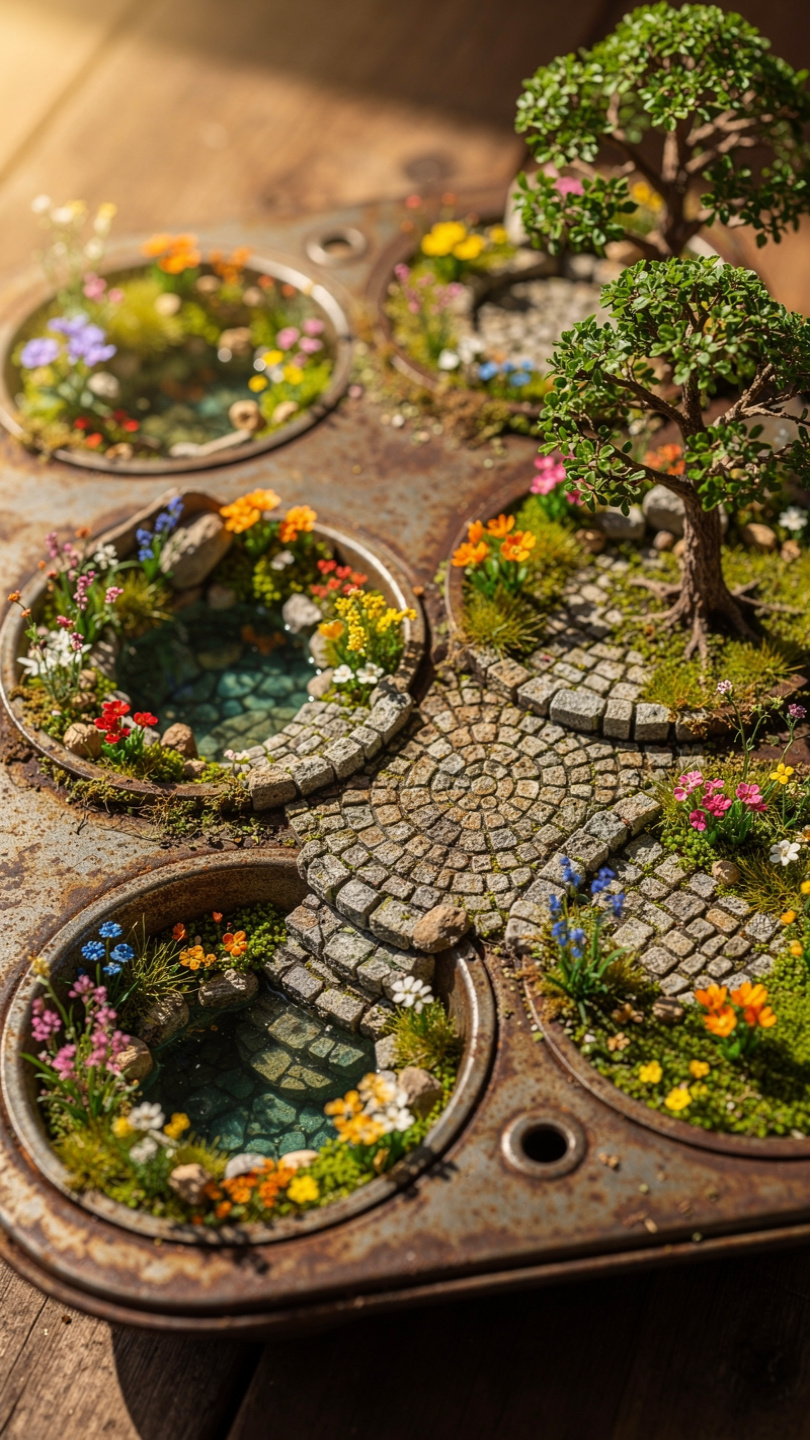
A muffin tin or a partitioned baking tray offers several small “plots” for a multi-family fairy community. Each individual cup can represent a different yard, with one housing a tiny pond made of resin and another featuring a pebble patio. This allows you to experiment with many different themes within one single, compact metal container.
The grid layout of the tin makes it look like a planned miniature neighborhood. You can use popsicle sticks to create tiny fences between the different sections to define the boundaries. It is a great way to involve children, as each person can be responsible for decorating their own “cup” in the garden. It is organized, creative, and fun.
14. Log Slice Landing

A thick slice of a tree branch provides a rustic, natural base for a woodland-themed fairy scene. Glue a small piece of bark upright to act as a natural “wall” or the side of a tiny cabin. Use dried lichen and small twigs to build a rugged, forest-inspired landscape that celebrates the raw beauty of the great outdoors.
Because the base is flat and sturdy, it can sit easily on a mantle or a narrow bookshelf. The earthy tones of the wood and lichen blend seamlessly with any rustic or farmhouse decor style. You can add a tiny “campire” made of orange beads and toothpicks to give it a cozy, adventurous feel. It brings the forest inside.
15. The Gourd Getaway
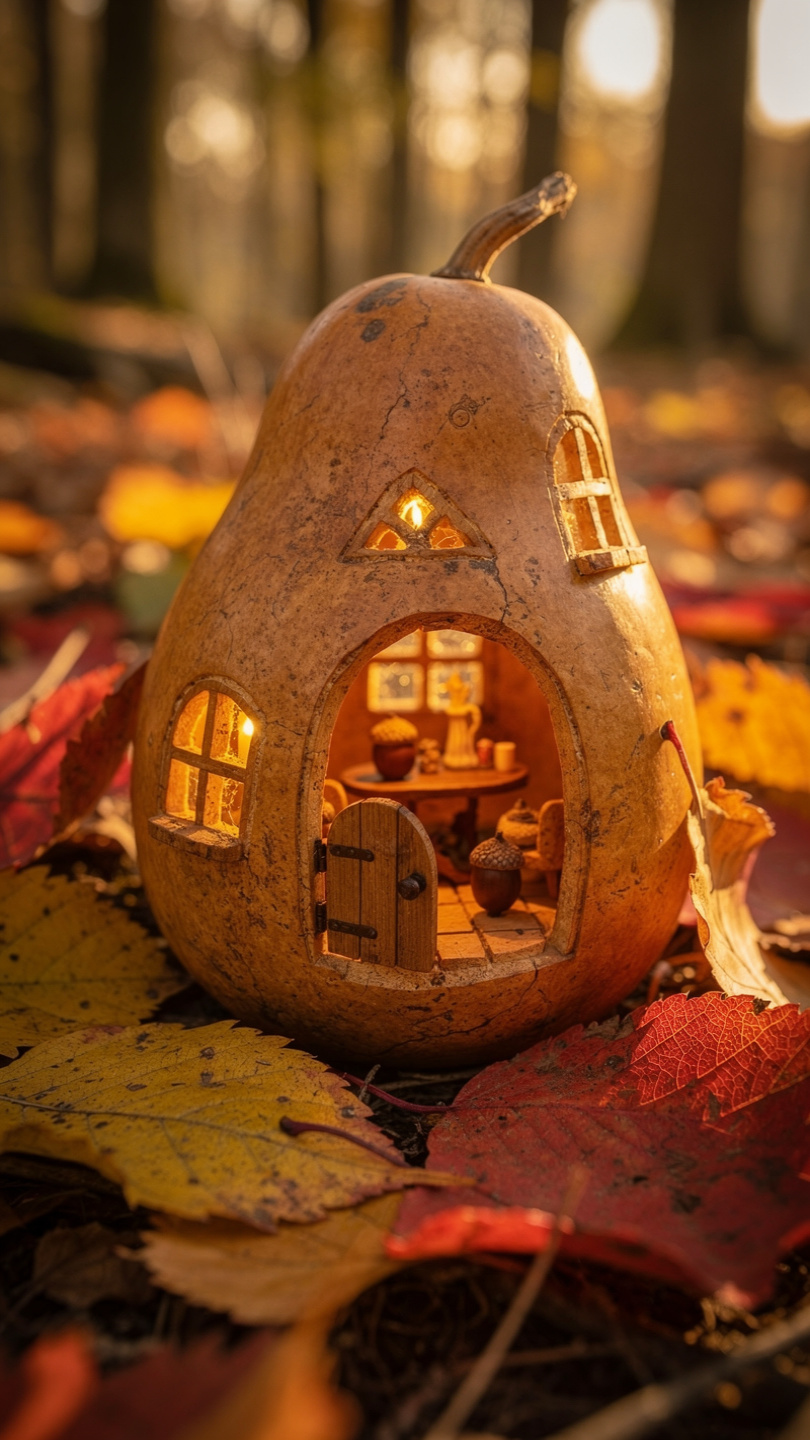
A dried, hollowed-out gourd makes for a natural and uniquely shaped fairy house. Cut a small door into the side and fill the interior with soft moss and tiny furniture made from acorns. The organic, rounded shape of the gourd feels like something a real forest sprite would choose for a cozy, hidden winter home.
Place the gourd nestled inside a larger flower pot or on a bed of autumn leaves for a seasonal display. The tough outer shell of the gourd is durable and can be painted or carved with intricate fairy symbols. It is an eco-friendly way to use natural materials to create a dwelling that feels truly integrated with the earth.
16. Picture Frame Portal
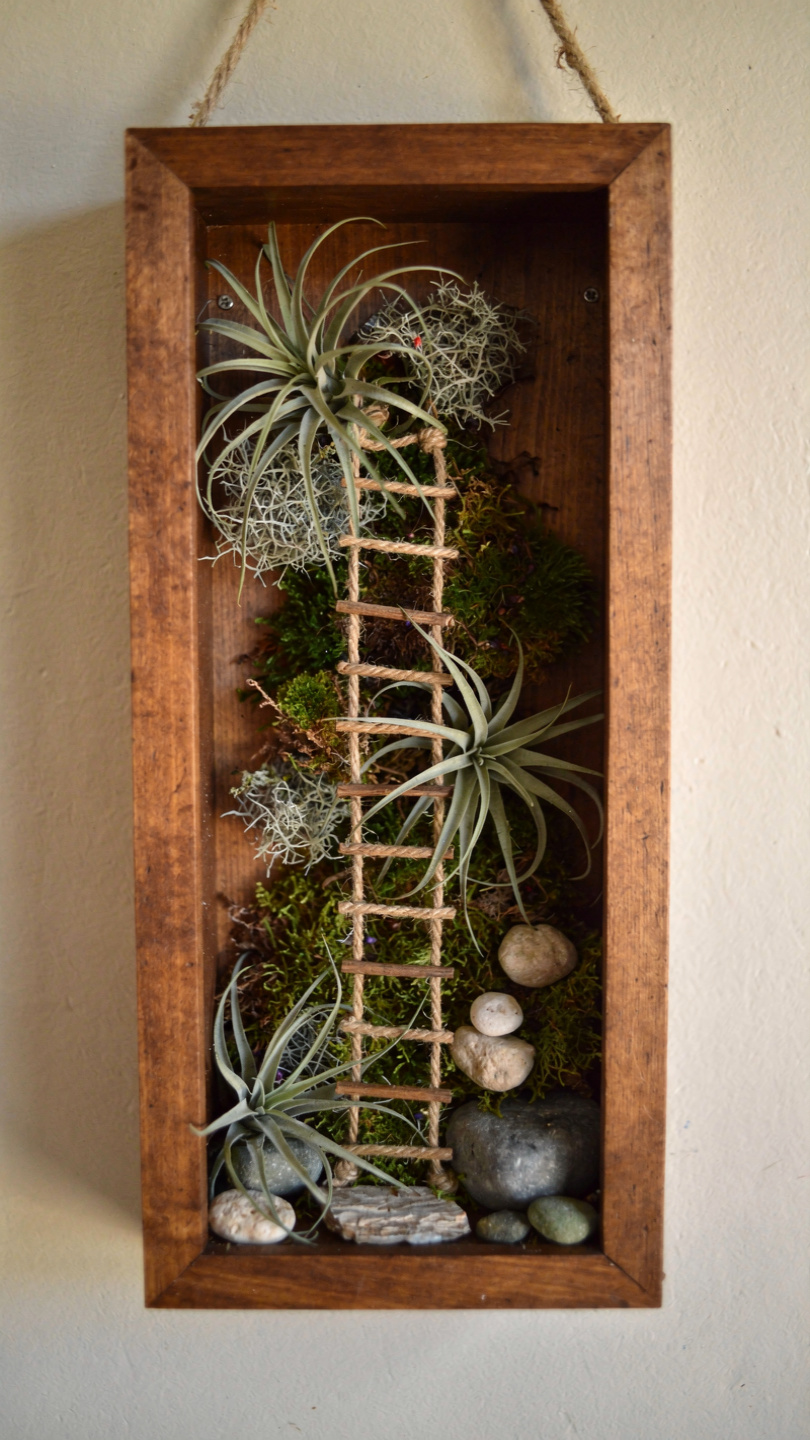
Use a deep shadow box or a thick picture frame to create a 2D-meets-3D vertical garden. Secure air plants to the backing and glue small pebbles and “fairy dust” glitter to the bottom edge of the frame. It turns your garden into a piece of living wall art that takes up zero floor space.
This is a sophisticated way to add greenery to a gallery wall or a hallway. Since air plants don’t need soil, the frame stays light and easy to hang securely on any wall. You can even glue a tiny ladder “climbing” out of the frame to suggest a fairy has escaped into your room. It is a clever, artistic conversation piece.
17. The Silver Spoon Swing
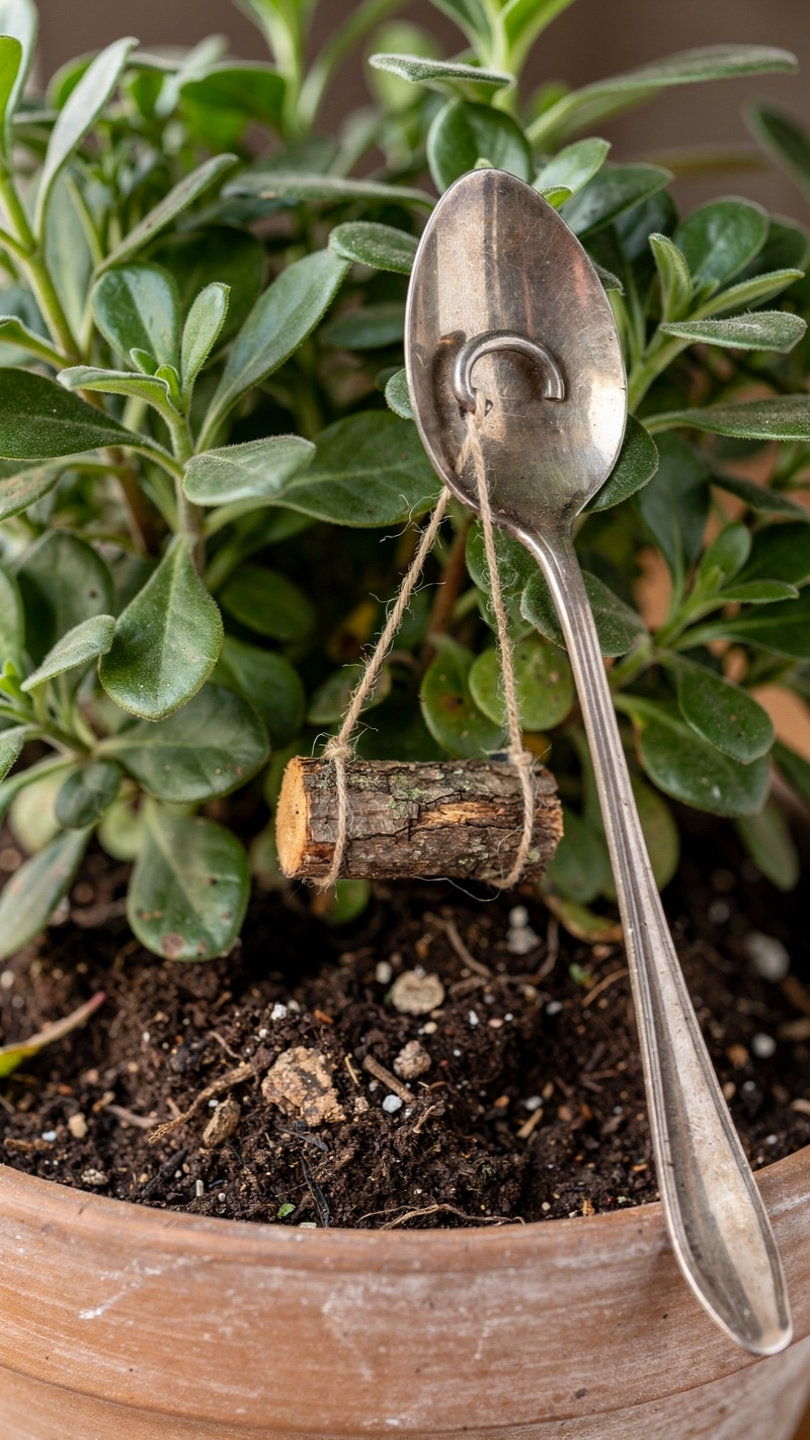
An old silver spoon can be bent and tucked into a small potted plant to act as a whimsical fairy swing. Use a bit of twine and a flat piece of bark to create the seat, hanging it from the curve of the spoon’s handle. This adds a sense of movement and play to even the simplest plant.
This idea is perfect for adding a “fairy” element to a plant you already own, like a potted ivy or a jade plant. It requires no extra floor space and uses everyday items in a creative, unexpected way. The polished silver adds a touch of vintage charm and glints beautifully when the sun hits the leaves of the plant.
18. Succulent Suitcase Tin
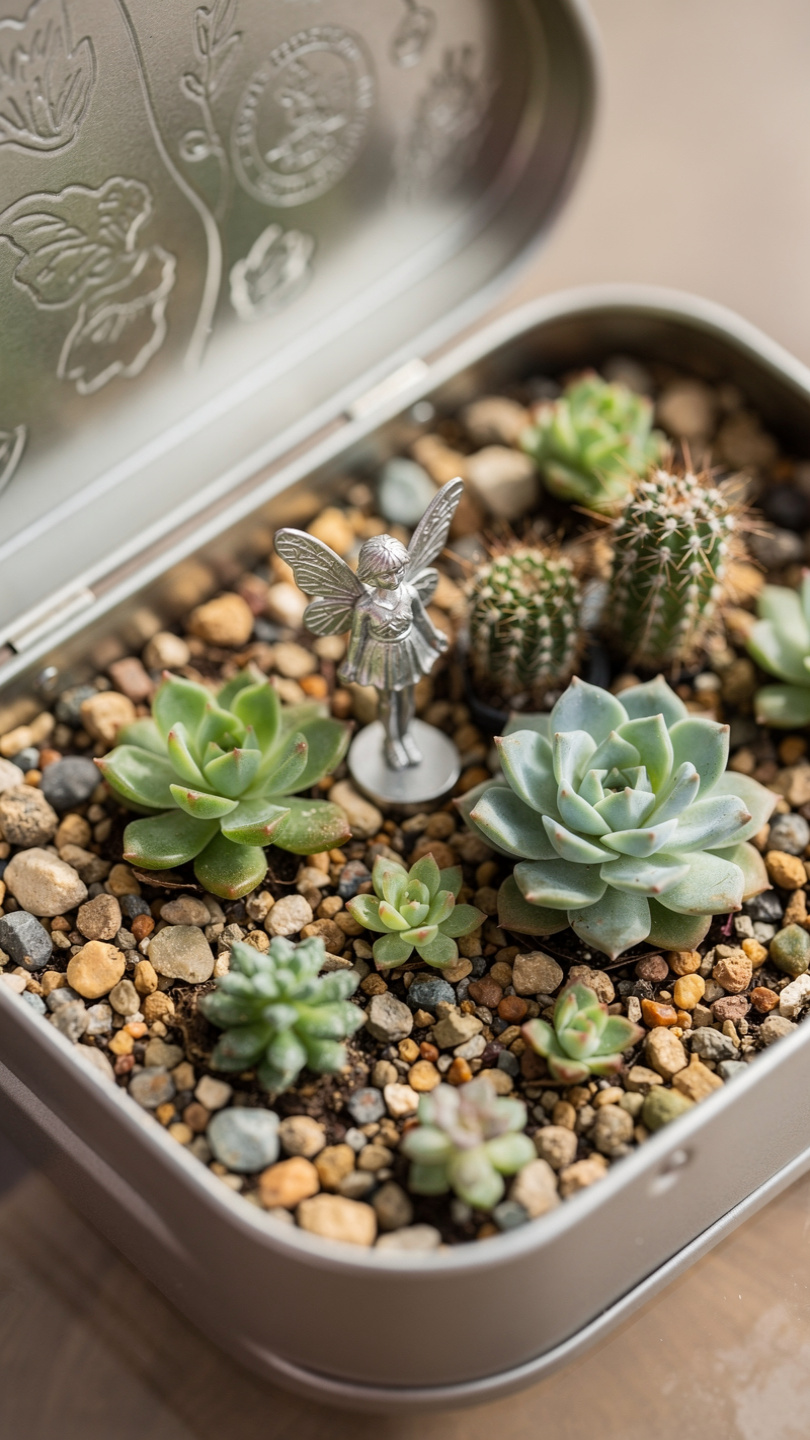
Small mint tins or candy containers are the perfect size for a “pocket” fairy garden. Use tiny succulent cuttings that stay small and require very little water to survive in the shallow tin. It is a portable bit of magic that you can keep in your bag or on a very small corner of your desk.
The metal tin provides a sturdy frame and a slightly industrial look that contrasts nicely with the soft plants. You can use a magnet to attach a tiny metal fairy to the inside of the lid. When the tin is open, it reveals a hidden world; when closed, it is a sleek, unobtrusive box. It is ultimate minimalism.
19. Coconut Shell Cradle
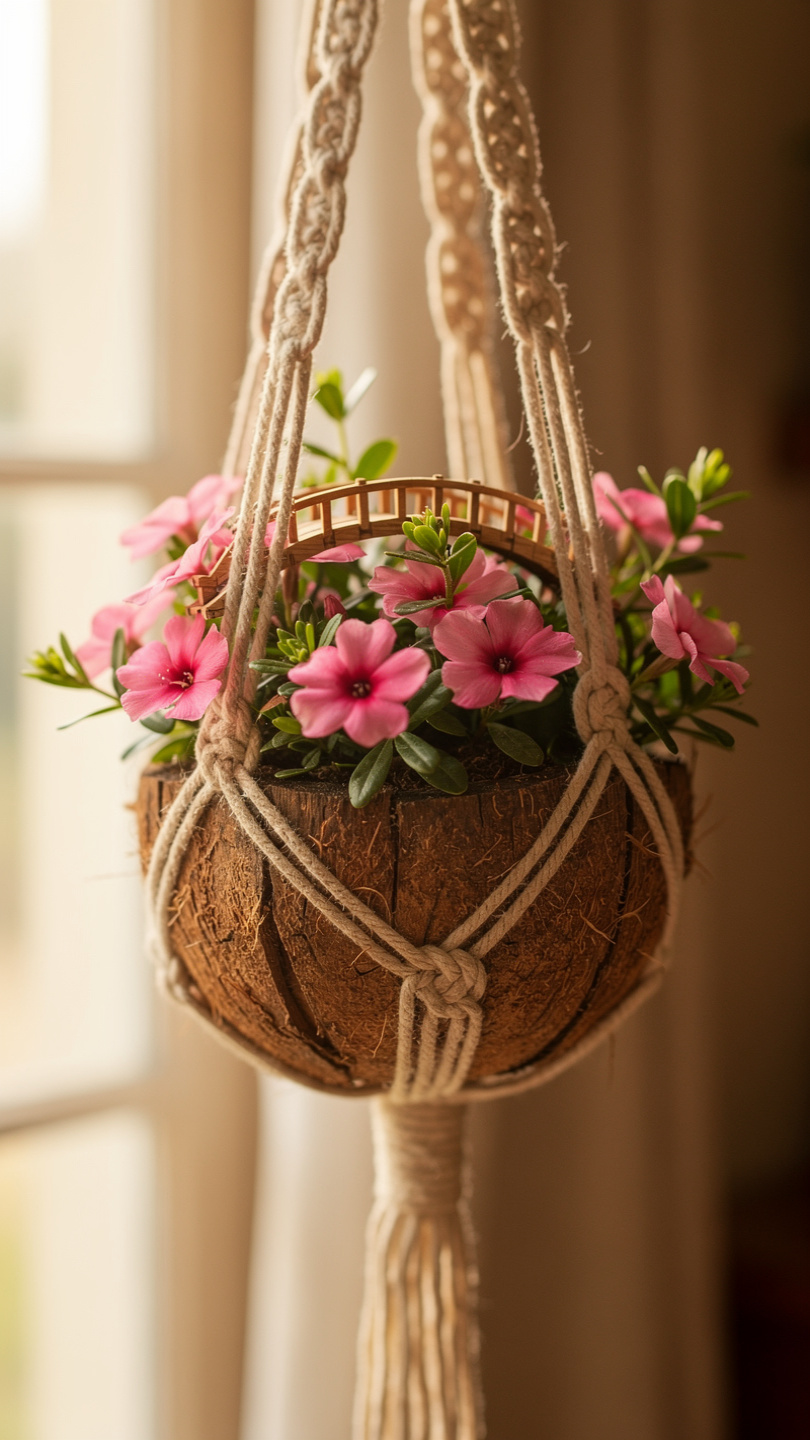
A halved coconut shell provides a tropical, bowl-shaped home for a miniature garden. The rough, hairy texture of the outside looks like a natural forest floor, while the smooth inside is perfect for holding soil. Plant a “Polka Dot” plant for a splash of pink and white color that mimics exotic flowers.
You can sit the coconut shell in a macramé plant hanger to keep it off your tables and save space. This creates a “hanging garden” effect that is perfect for small apartments with limited furniture. It feels organic and earthy, making it a great addition to a bohemian or tropical-themed room. It is a very sustainable choice.
20. The Jewelry Box Jungle
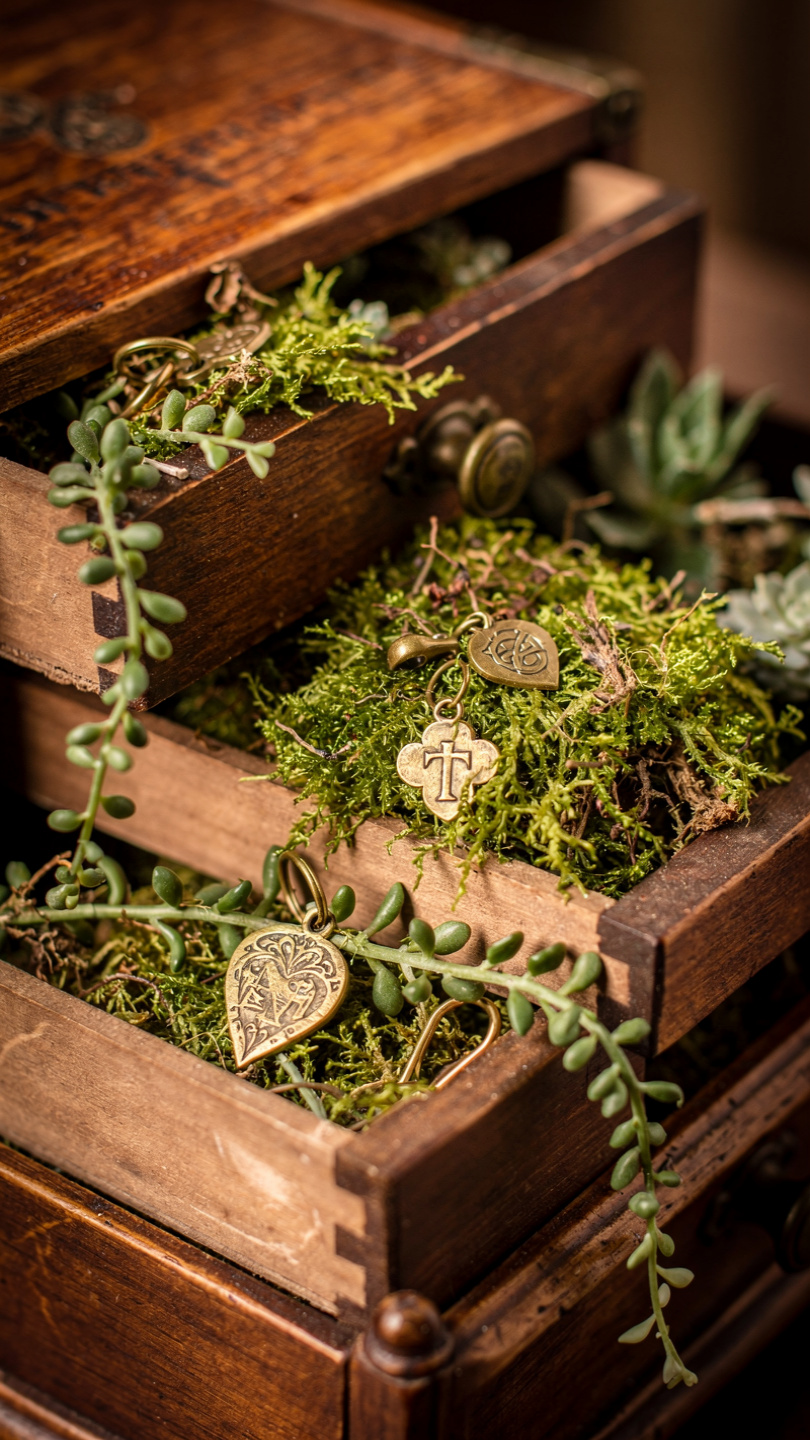
An old wooden jewelry box with small drawers can be turned into a multi-level fairy apartment. Fill the top compartment with moss and the open drawers with tiny trailing plants like “Baby Tears.” This creates a stepped effect that allows the “fairies” to have different levels of living space within one compact piece.
This is a wonderful way to repurpose a sentimental item that might be slightly damaged or missing its mirror. The velvet lining (if removed) reveals beautiful wood that looks like aged timber in a miniature scale. You can place tiny “treasures” like brass charms or old rings inside the garden to act as fairy artifacts. It is truly enchanting.